## Metadata
- Author: [[Anime News Network]]
- Full Title:: Understanding Evangelion
- Category:: #🗞️Articles
- Document Tags:: [[Evangelion]],
- URL:: https://www.animenewsnetwork.com/feature/2002-06-11
- Read date:: [[2026-01-06]]
## Highlights
> Evangelion is like an onion: layers of allegory and hidden meanings are peeled back only to reveal several more underneath. ([View Highlight](https://read.readwise.io/read/01ke895em4emny64hvsx0ssyck))
> It can be enjoyed at face value as an expertly realized sci-fi action adventure, but it is also a bleak satire of the genre, a coming-of-age parable, and a treatise on confronting loneliness and uncertainty in the adult world. ([View Highlight](https://read.readwise.io/read/01ke896v9krngq7cqwa05x9vja))
> Director Hideaki Anno has claimed that, in his opinion, the movies were not a necessary conclusion to his work, and that the television ending, told in abstract animation entirely in the character's minds, was all the ending that was needed. ([View Highlight](https://read.readwise.io/read/01ke899hd46mrvrcgpk1rdt687))
> Adventure heroes customarily represent the audiences' aspirations: they are people we'd like to be. Shinji, conversely, is representative of the audiences' realizations: his flaws we recognize in ourselves. ([View Highlight](https://read.readwise.io/read/01ke89ae1jftt2026canasgatq))
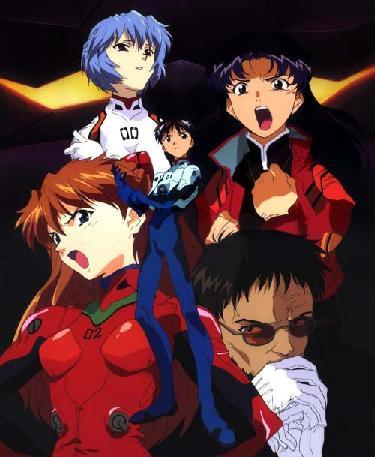
> Evangelion is about being alone, about feeling alone and coming to terms with loneliness. But Shinji is not alone in feeling alone. Evangelion's other main players suffer from the exact same fears and uncertainties; they just deal with them in different ways. ([View Highlight](https://read.readwise.io/read/01ke89w80fehgt562a5vxkvn2f))
> Midway through the production of the television run Hidekai Anno suffered a nervous breakdown, and it is at precisely this point in the series that the first of many animated "head-trips" occur. ([View Highlight](https://read.readwise.io/read/01ke89xtxy2py6mfgb0e1q5m51))
> Our world is what we make of it, truth is subjective, and one must learn to love oneself before they can love another. ([View Highlight](https://read.readwise.io/read/01ke8a165xt9yjz9tq71gfr577))
> Emotionally stunted in all other areas of her life, Asuka has focused exclusively on the Evangelion, her "job", to give meaning to her existence. As she loses the ability to control her Eva late in the series she loses the only sense of value she knew. Shinji also feels that his "job", piloting Eva, is his only worthwhile quality. Unlike Asuka, who happily turned a blind eye to this dilemma until it was too late, Shinji frets over finding meaning to his life outside his work. Thus, the Evangelion is representative of our duties and responsibilities....those things we don't necessarily want to do but have to do. It important to take pride in them but it is also important to find other things to take pride in as well, else they become your only identifier. ([View Highlight](https://read.readwise.io/read/01ke8a37jemz2ta2amxfsc4v26))
> The central Evangelion, Shinji's Unit-01, is literally and figuratively his own mother. [Yui Ikari](https://www.animenewsnetwork.com/encyclopedia/people.php?id=181589) was absorbed into Unit-01 in an experiment during her son's toddler years ([View Highlight](https://read.readwise.io/read/01ke8a8fqx6pbf3gvac0a8p02a))
> years later Shinji is dependant on Unit-01 for a means to survive. Beginning his journey into adulthood, Shinji is both resentful of this dependence and at the same time afraid to leave the comfort and safety it provides. It has even been suggested that Shinji's entering into Unit-01 is a Freudian "return to the womb", and that his struggle to be free of the Eva is his "rite of passage" into manhood. Shinji must learn to let go of his mother before he can grow as person if he hopes to attain a serious adult relationship with the girl he cares for. ([View Highlight](https://read.readwise.io/read/01ke8a930nybhvyek9yx02yhdx))
> Asuka accuses him of loving her purely for selfish reasons; that he is only running to someone...anyone...for comfort. Unsure of his own self, Shinji has feared this to be true all along. At the end of his rope, feeling absolutely rejected and angry at her for denying him, Shinji strangles Asuka. Driven mad by his internal struggles, Shinji almost strangles Asuka for real later in the movie. She is saved by finally admitting her feelings to him, and as she gently caresses his cheek he snaps out of his delusion and collapses in tears. By opening their hearts to one another Shinji and Asuka at last have a chance at happiness. Unfortunately the brutality of this scene obscures its tender meaning, and the Evangelion saga ends on a dour note despite reprising the positive message from its television conclusion. ([View Highlight](https://read.readwise.io/read/01ke8abwdxcxcgha63jyxta6wr))
> As Shinji's mental world collapses, Third Impact is at last initiated and the physical world begins to end as well. Mirroring the darkest hours of its protagonist's breakdown, the apocalyptic events of "The End of Evangelion" are fittingly nightmarish. While Shinji eventually decides that his life is worth living, his return to a barren and ravaged reality reminds us that merely changing your perspective on life will not immediately alter it. Shinji must continue to strive to attain happiness: no one is going to hand it to him on a silver plate. ([View Highlight](https://read.readwise.io/read/01ke8ada7v6tv1g7hp69xenrs2))
> The real marvel of Evangelion is not it's abstract ending but the carefully crafted characterizations that inhabit it. Had Anno not taken the time to carefully delineate his character's personas the experimental sections would be meaningless and insufferable, a point many of Evangelion's imitators fail to take into consideration. ([View Highlight](https://read.readwise.io/read/01ke8aew1x1c9yd9v867b57p23))
> By the time the story begins to unravel in the series' third act its players have been so well established they are able to entertain on a blank stage (which indeed they do). If nothing else, the narrative abandonment serves to illustrate that in the end it is the characters that make or break the success of any work of fiction. ([View Highlight](https://read.readwise.io/read/01ke8ah5s4arxmqbgb77hy6f88))