## Metadata
- Author: [[John cutler|John Cutler]]
- Full Title:: TBM 285: Shared Teams and Apples-to-Oranges Priorities
- Category:: #🗞️Articles
- Document Tags:: [[Prioritization techniques|Prioritization Techniques]], [[Prioritization techniques|Prioritization Techniques]],
- URL:: https://cutlefish.substack.com/p/tbm-285-shared-teams-and-apples-to
- Finished date:: [[2024-05-02]]
## Highlights
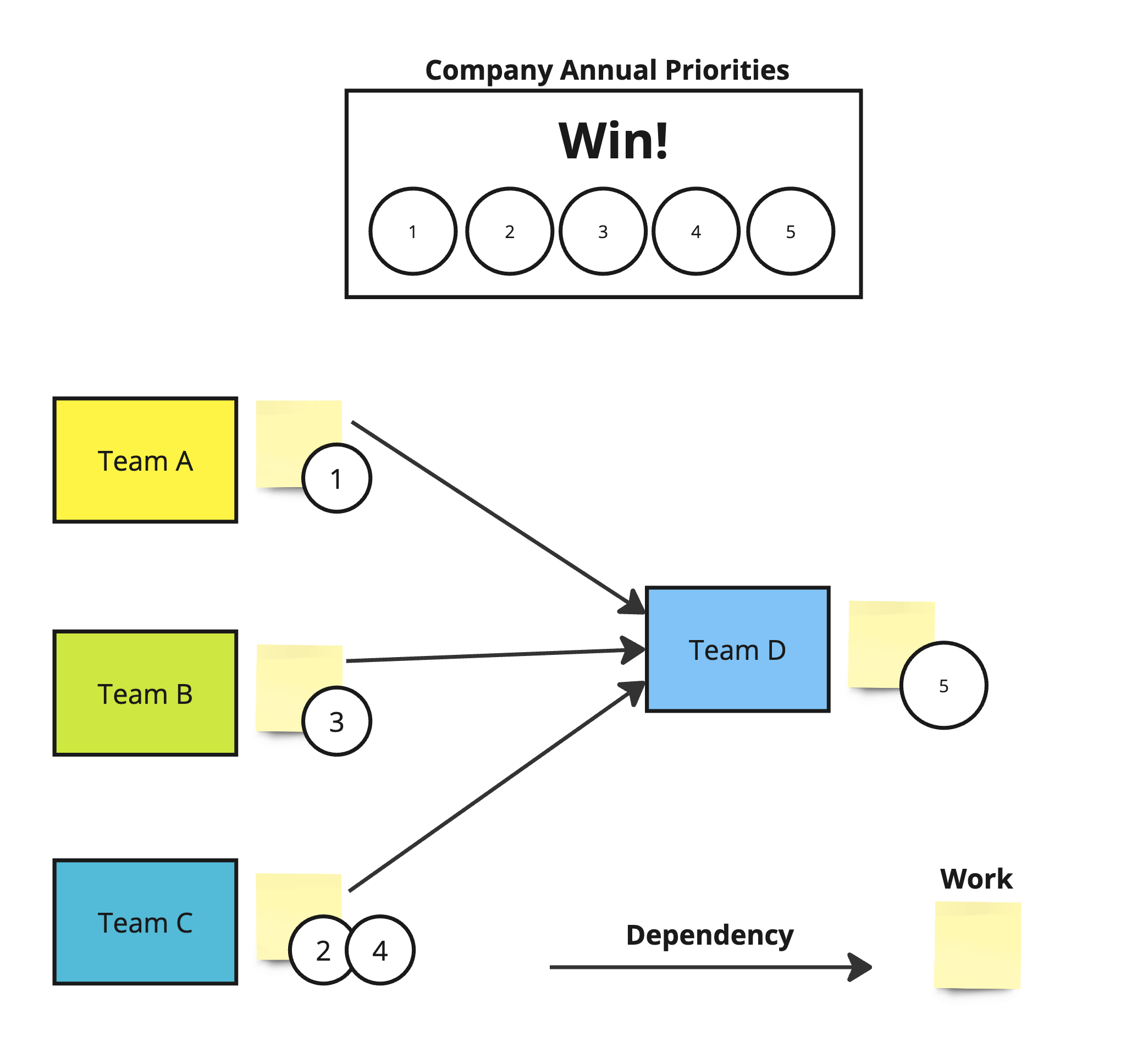
> **Ruinous Pragmatism**. You try to make everyone happy but end up making everyone mad at you (and losing trust in you) because you let everyone down. This becomes a wicked cycle of unrealistic commitments, dropping the ball, and eroding trust. Oh, and you also ignore your own priorities. Pros: You can do this for a couple of cycles before people lose trust, and it seems proactive. Cons: It almost never works. ([View Highlight](https://read.readwise.io/read/01hww6avc0mpt49xeckna5ha3m))
> **Go Kind of Rogue**. Make prioritization calls in a vacuum, avoid direct conflict, remain a bit aloof, and hedge your bets on counteracting disappointment with a good track record of shipping and achieving some of your own goals. Pros: You stay fast and effective and get to your goals. Cons: You are not inclusive and will likely build resentment in your team among certain patterns when you randomly decide they aren’t important. ([View Highlight](https://read.readwise.io/read/01hww6bbfrjghrq69rwv3f9dds))
> **Cage Match**. Have their “customer” teams fight for their capacity by forcing some kind of sequenced queue or similar (if escalated, this could include a leader being the tie-breaker or prioritizing lists of projects). Pros: great for sequencing. Cons: you’re pegged as a “service” team because you’re hands-off, and the teams resent you for making them fight each other. Leaders resent having to be the tie-breaker. Teams just work around you. ([View Highlight](https://read.readwise.io/read/01hww6bpx0z38taypbmxxsv6wy))
> **Partnership & Global Priorities**. Advocate for either an apples-to-apples prioritization scheme or for someone to prioritize the priorities so teams can autonomously make the call and say, “See, here are the force-ranked priorities” or “Well, the strategy talks about how to tie-break in these situations.” Pros: autonomous, empowering, and effective. Cons: Leaders resent you for forcing them to prioritize the priorities. Why can’t you just deal with it on a case-by-case basis? ([View Highlight](https://read.readwise.io/read/01hww6car82mztn49frsvbj6q1))
> I think the answer is probably Cage Match, for now ([View Highlight](https://read.readwise.io/read/01hww6gag4n9exmcwyz5hdz3mr))