
## Metadata
- Author: [[olga|Olga]]
- Full Title:: Refresher on Retention - Issue 236
- Category:: #🗞️Articles
- Document Tags:: [[Data analysis|Data analysis]],
- Finished date:: [[2024-12-13]]
## Highlights
> I've never had luck with retention reporting from analytic tools such as Heap, Amplitude, Mixpanel, RevenueCat, and Chargebee, and I often have to replicate reports myself to ensure they are accurate and trustworthy. ([View Highlight](https://read.readwise.io/read/01jeyhx0bndgvsnfqm1md415cj))
>  ([View Highlight](https://read.readwise.io/read/01jeyhz24yxfbn3j09zz5wqm85))
>  ([View Highlight](https://read.readwise.io/read/01jeyhz26hg4j0pac5x53yz9q2))
>  ([View Highlight](https://read.readwise.io/read/01jeyhz273hnwsag7n41gsws2z))
> For eco-system (North Star) reporting, the best approach is to use N-Day retention. If you must use Unbounded, then keep it for a shorter period of time frames - from 2 weeks up to 1 month. ([View Highlight](https://read.readwise.io/read/01jeyhzdj44sg89q51fevg31vt))
> N-Day retention is more sensitive in the short term and responds faster to improvements, which makes it best for reporting weekly or monthly KPIs. ([View Highlight](https://read.readwise.io/read/01jeyhzy8333vyjcj8teq1kw0h))
> Unbounded Retention naturally will underperform for newer cohorts vs older ones, as older cohorts **have a longer timeline to come back**. ([View Highlight](https://read.readwise.io/read/01jeyj02aqmd9dwnph6feqn51t))
> While Unbounded retention is useful for root-cause analysis, experimentation monitoring, and deep-dives, N-Day retention is recommended for KPI reporting. ([View Highlight](https://read.readwise.io/read/01jeyj08c5bftsbbmfb39w3kra))
>  ([View Highlight](https://read.readwise.io/read/01jeyj0fanvbvzx6g55smw9cy7))
>  ([View Highlight](https://read.readwise.io/read/01jeyj0fck8prf43n1b7nkyqy9))
>  ([View Highlight](https://read.readwise.io/read/01jeyj0fd7qvb3hfgdnxhm72cg))
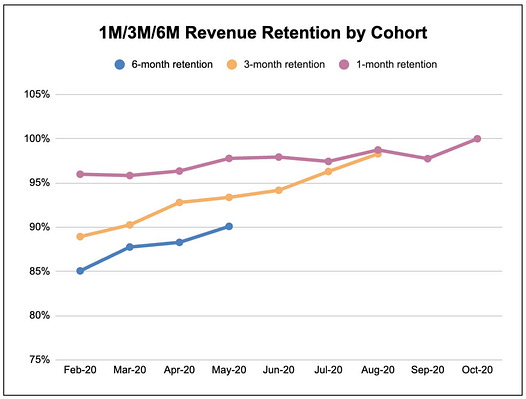
> To make retention actionable, we need to segment or break it down. That’s why cohorted retention exists - it serves as a bridge to more proactive data monitoring.
> [](https://substack.com/redirect/5cb90e5a-a9f1-4fbf-91ea-ae35204360f9?j=eyJ1IjoiNDRpMmEifQ.txKr3BEB06jM7pp-5wphmyXof7jFdPvpfRX5kIjhK8g) ([View Highlight](https://read.readwise.io/read/01jeyj15f31wp3mpcpzaxp17de))