## Metadata
- Author: [[Kevin Guyan]]
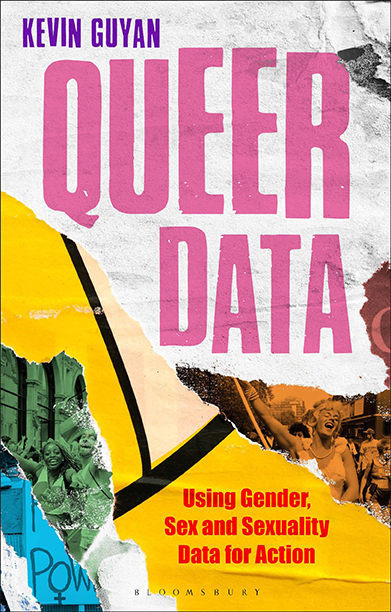
- Full Title:: Queer Data
- Category:: #🗞️Articles
- URL:: https://readwise.io/reader/document_raw_content/462120675
- Read date:: [[2026-06-04]]
## Highlights
> When data captures the lives and experiences of LGBTQ people, numbers do not speak for themselves – they always speak for someone. As I will argue, decisions made about who to count, what to count and how to count are not valueneutral but bring to life a particular vision of the social world ([View Highlight](https://read.readwise.io/read/01kt7jr678w0ncyztafjscb1nq))
> This data dilemma, the potential benefits of being counted versus the risk of being counted in ways that are inaccurate or further entrench inequality, might seem relatively new. ([View Highlight](https://read.readwise.io/read/01kt7k26gx53z7765zvz2jd7y8))
> also became clear to me that, both inside and outside higher education, a small number of campaign groups had weaponized gender, sex and sexuality data in an attempt to roll back the rights of LGBTQ people.1 ([View Highlight](https://read.readwise.io/read/01kt7kbx4aqxbyc0a3k4fspszy))
> These actions are just the beginning and overlook the construction of gender, sex and sexuality categories, the relationship between these concepts, the mismatch between how people self-identify and how they are perceived by others and the fluidity of gender, sex and sexuality to change across time and space.2 ([View Highlight](https://read.readwise.io/read/01kt7kh0ytebta5jv82znq75sh))
## New highlights added [[2026-06-07]]
> gender is used to describe a person’s social and personal identity ([View Highlight](https://read.readwise.io/read/01ktfbjm12npg79z2yat57zj1h))
> sex is an identity based on primary and secondary sex characteristics, such as genitalia, reproductive functions, hormones, breasts and facial hair. ([View Highlight](https://read.readwise.io/read/01ktfbk3a60k4g5q361h3g8yk7))
> Although distinct, concepts of gender and sex rely on each other for meaning: sex is not exclusively biological (as it is understood through gendered ideas about bodies), just as gender is not exclusively a social or cultural phenomenon (how we experience our gendered bodies is informed by sex). ([View Highlight](https://read.readwise.io/read/01ktfbmmkg0bdhhsnran43txy1))
> so that ‘data about us’ becomes synonymous with ‘data for us’, ([View Highlight](https://read.readwise.io/read/01ktfbtjjfvenx8zdedmrh3032))
> Browne has described a lack of critical engagement between users of quantitative methods and those involved in the field of queer studies, as ‘quantitative methods require the use of categories’ whereas a queer approach ‘often eschews the use of labels and definitional fixities in favour of fluid discussions of practices,
> lives and relegating processes’. ([View Highlight](https://read.readwise.io/read/01ktfc6nr86va8ee20bepj6k2d))
> The operation of quantitative methods, particularly in large-scale exercises such as national censuses, can mask design decisions about how to categorize groups and who to count. ([View Highlight](https://read.readwise.io/read/01ktfc85rdwt0ta52dey16yp10))
> ‘Visibility is a trap’, warned Michel Foucault in his account of how power operates in a panoptic prison, where prisoners are unsure when they are being watched and therefore adapt behaviours as if they are always under surveillance ([View Highlight](https://read.readwise.io/read/01ktfcck60c2y88b6sxg5ahfj9))
> a society with more data about LGBTQ people is not automatically a society that is better for LGBTQ people. ([View Highlight](https://read.readwise.io/read/01ktfcstj2z4q2grqkz4cvvrdc))