## Metadata
- Author: [[readwise.io]]
- Full Title:: A New Shape for Work
- Category:: #🗞️Articles
- URL:: https://readwise.io/reader/document_raw_content/523271970
- Read date:: [[2026-11-23]]
## Highlights
> When you connect your agents to a central shared space to save and find information (again, what we call a context system) then knowledge accumulates, collaboration flourishes, and the system’s usefulness begins to compound ([View Highlight](https://read.readwise.io/read/01m83p817r4m0km4yw92zabxyk))
> When used this way, the system and the agents that use it become something like a central nervous system for an organization’s
> information. Some people call it a “company brain.” We call it a “context system.” It works great with personal agents , and it becomes even more valuable when you build factories on top of it. ([View Highlight](https://read.readwise.io/read/01m83p9v0s52v5h1w5kc1cycz5))
> This structure is among the most valuable IP any modern organization can have, because it defines the limit of what is possible for agents to do within that company. ([View Highlight](https://read.readwise.io/read/01m83p9kj6v82c9f2p4gezwf4x))
> That way, whomever manages the factory can debug, optimize, and update things on a continual basis. ([View Highlight](https://read.readwise.io/read/01m83pbzj7tben03r4twhza8q0))
>  ([View Highlight](https://read.readwise.io/read/01m83pcnwceqscambeszbp5xsm))
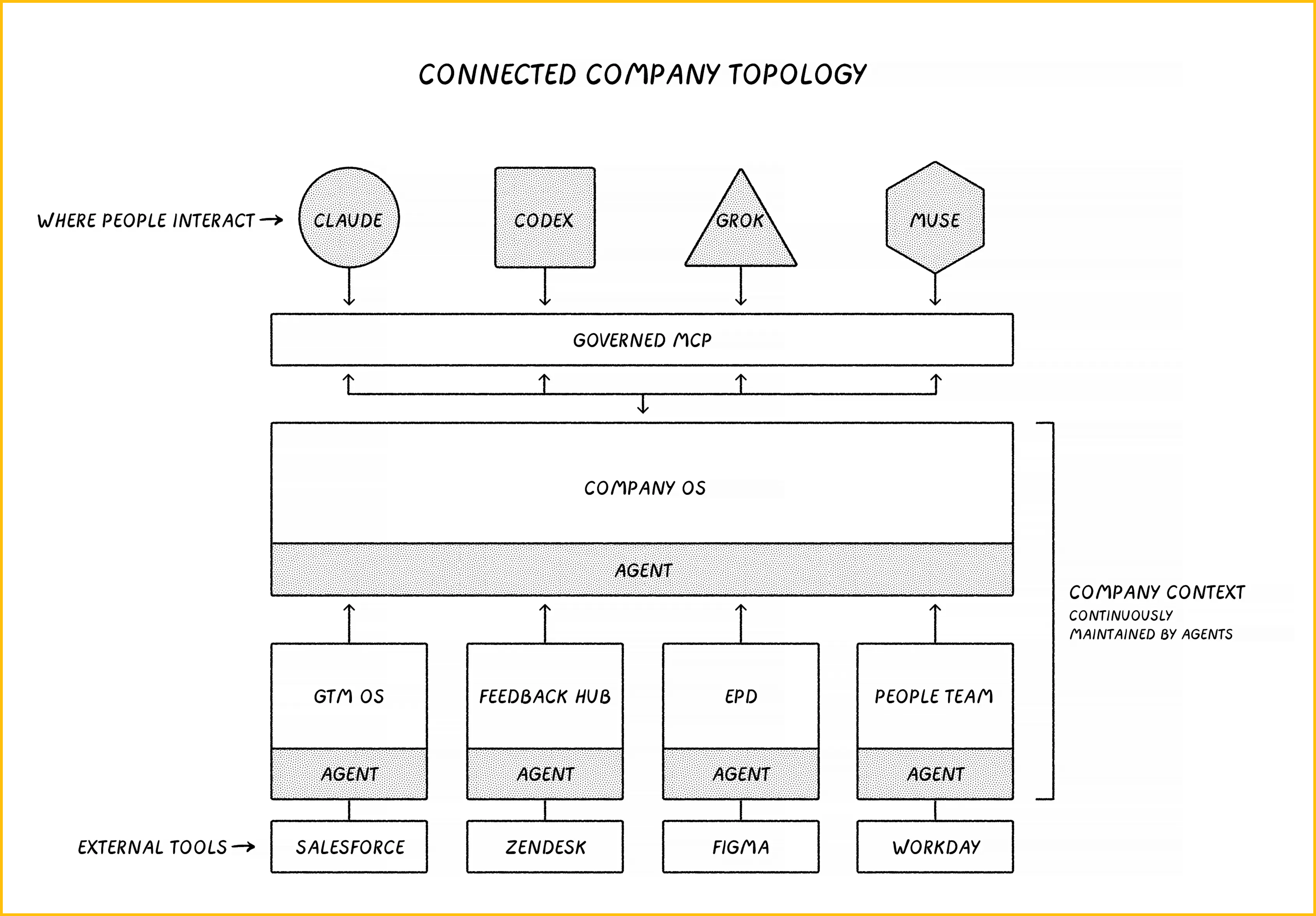
> Without a context system, this agent may need to connect separately to Slack or Microso$ Teams (a lot of key context lives in Slack or Teams channels shared with customers), your CRM, calendar, email, perhaps some product analytics sources, your meeting recording app, and more. Each one of these systems has its own way of governing and organizing data, and navigating these discrepancies costs valuable tokens and increases the likelihood of errors. Plus, some systems are much more searchable and navigable than others. ([View Highlight](https://read.readwise.io/read/01m8478zbd9y5yx0kf5nm2wvb6))
> agents need a good, central place to access that context. This is sort of like a “data warehouse” , but instead of all customer data, you want all internal operating data in one place. — Call it a “context warehouse,” if you like. It makes it easier for agents to get you the right answer faster. ([View Highlight](https://read.readwise.io/read/01m8479njyfpe1badxwcsbfvv3))
Didn’t thought that the data agent, for example, may need permissions in the docs
> Di#erent people (and agents) inside your organization need di#erent levels of access to context. ([View Highlight](https://read.readwise.io/read/01m847s78w7esrvv6kcsxh1fjq))